


Which Professional Nail Drill Machines Are Worth It in 2026?
Last Updated: November 3, 2026
Quick Summary
The professional nail drill machines worth it in 2026 are the CT Solar 2 at $150.00 for best value and the URAWA Pro G3 at $340.00 for low noise and vibration. The CT Solar 2 runs 8 to 10 hours per charge and suits busy salons, while the URAWA Pro G3 suits full-day salon and mobile work.
- The CT Solar 2 works on both 110v and 220v and has an acetone-resistant finish.
- The CT Solar 2 comes with a one-year parts and labor warranty and fits UP200 and Manipro plugged handpieces.
- The URAWA Pro G3 is made in Japan and designed for mobility, precision, and minimal noise and vibration.
- Buying on RPM alone is the most common mistake; control at 20,000 RPM and below decides results.
- Budget for a proper bit kit before a fancier machine, since bits change results more in year one.
Table of Contents
- Quick Comparison: Best Professional Nail Drill Machines at a Glance
- How We Evaluated These Professional Nail Drill Machines
- CT Solar 2: The Best Value Professional Nail Drill Machine
- URAWA Pro G3: The Quiet, Low-Vibration Pick for Full-Day Salon Work
- Why a Professional Nail Drill 35,000 RPM Matters for Speed and Control
- The Best Professional Nail Drill for Beginners: What to Buy First
- The Best Nail Drill for Acrylic Nails: Torque, Bits, and Control
- Cordless Professional Nail Drill: Battery Life, Portability, and Trade-Offs
- Safety, Heat Management, and Protecting the Natural Nail
- Choosing Bits and Matching Them to Your Services
- Frequently Asked Questions
Quick Comparison: Best Professional Nail Drill Machines at a Glance
Two professional nail drill machines we stock at Nail Maxx are the CT Solar 2, a value option, and the URAWA Pro G3, which is designed for low noise and vibration. Below is our full breakdown of which one fits your chair, your services, and your budget in 2026.
| Model | Price | Power Source | Best For | Standout Trait |
|---|---|---|---|---|
| CT Solar 2 | $150.00 | Rechargeable, 110v/220v | Best value, busy salons | 8-10 hours per charge, acetone-resistant box |
| URAWA Pro G3 | $340.00 | Rechargeable, portable | Full-day salon and mobile work | Minimal noise and vibration |
A quick note on how we think about this category. A nail drill is not a single purchase; it is a handpiece, a control unit, and a bit collection that all have to work together. The machine you pick determines which bits fit, how hot the handpiece runs, and how long you can work before your wrist complains. That is why the cheapest unit on the shelf is rarely the cheapest over a year.
How We Evaluated These Professional Nail Drill Machines
- Torque at low speed: Does the motor hold RPM when the bit meets acrylic, or does it bog down and grab?
- Control resolution: Can you dial down to a crawl for cuticle work and product removal near the natural nail?
- Heat and vibration: Does the handpiece stay comfortable through a full set?
- Battery and charging: How many hours per charge, and how long to recharge?
- Serviceability: Are replacement handpieces and parts available?
CT Solar 2: The Best Value Professional Nail Drill Machine
The CT Solar 2 is a professional nail drill machine we carry. The rechargeable control box runs 8 to 10 hours per charge, works on both 110v and 220v, and has an acetone-resistant finish.
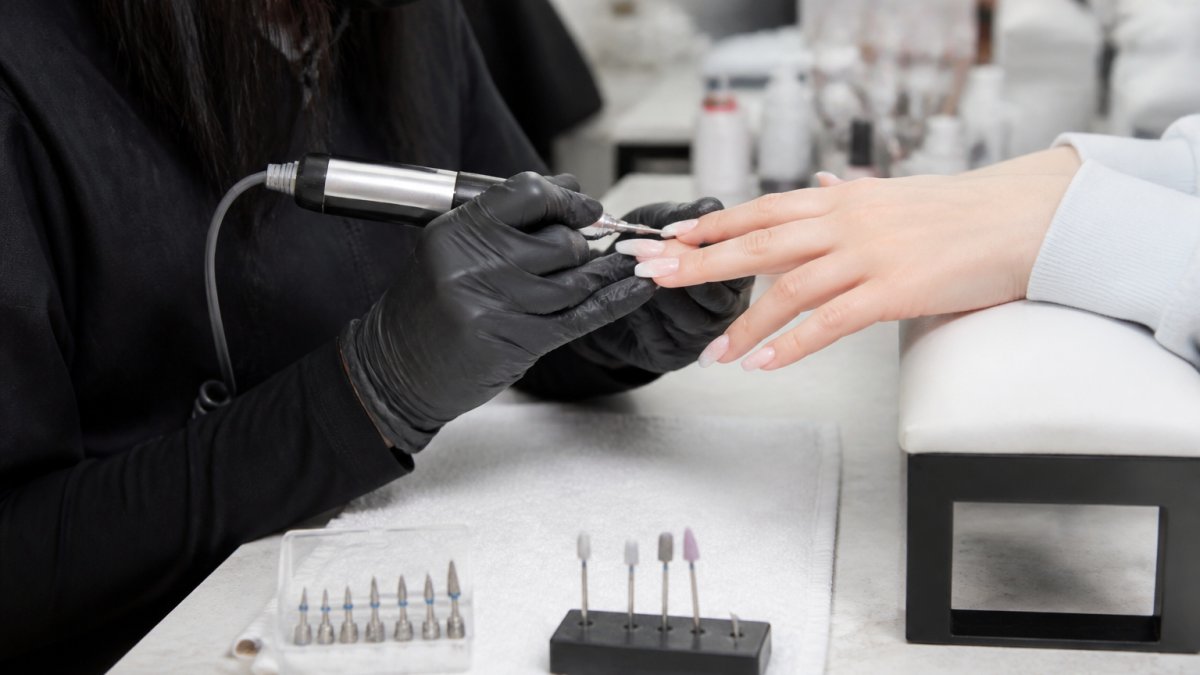
For a solo tech or a busy salon, that battery window supports a full day of work between charges. The stainless steel belt clip and handpiece holster attach to either side of the control box, which sounds minor until you are mid-service and need the handpiece within reach. It comes with a one-year parts and labor warranty, and it is compatible with UP200 and Manipro plugged handpieces.
Best for: technicians who want professional-grade power and portability without paying flagship prices. Skip if: you need the absolute lowest noise and vibration for a shared or client-sensitive space.
You can see the full CT Solar 2 details and specs before you commit.

URAWA Pro G3: The Quiet, Low-Vibration Pick for Full-Day Salon Work
This compact, rechargeable e-file is built for technicians who work eight hours with the handpiece in hand and feel every bit of vibration by the end of the day.
The G3 is made by URAWA in Japan and designed around mobility, precision, and minimal noise and vibration.
Where it falls short is price. At $340.00 it costs more than double the CT Solar 2, so it only makes sense if you are billing enough hours to justify the comfort and precision. For mobile technicians and full-time salon techs, that math usually works. For a hobbyist doing friends' nails on weekends, it rarely does.
Best for: full-time salon and mobile nail technicians who prioritize low noise and vibration. Skip if: you are just starting out and want to learn on a value machine first.
Why a Professional Nail Drill 35,000 RPM Matters for Speed and Control
Higher top speeds exist, but the number that decides your results is how smoothly the machine runs at 20,000 RPM and below.
Speed alone does not determine results; control across the range matters, since most work happens at low-to-mid speeds.
That is why the motor matters as much as the top number.
Watch out: buying on RPM alone is the single most common mistake we see. A 40,000 RPM drill with poor low-speed control will damage natural nails faster than a well-regulated 35,000 RPM unit.
The Best Professional Nail Drill for Beginners: What to Buy First
The best professional nail drill for beginners is one with forgiving low-speed control and a clear upgrade path, not the cheapest unit on the shelf. Start with a value machine that lets you learn bit control and speed management, then upgrade once your service volume justifies it.
Beginners tend to make two mistakes. First, they buy a high-RPM drill and treat speed as a shortcut, which is how natural nails get thinned and heat spikes happen. Second, they buy a bargain unit with a wobbly handpiece, which teaches bad habits because the bit never runs true. A steady, controllable machine is a teaching tool as much as equipment.
The CT Solar 2 is a reasonable option for beginners, with an 8 to 10 hour battery per charge and a $150.00 price. For a deeper guide on assembling a complete starter kit, see how to choose starter nail kits for home salons. Bits are a separate purchase.
One insider tip: budget for a proper bit kit before you budget for a fancier machine. Bits change your results more than the drill body does in the first year.
The Best Nail Drill for Acrylic Nails: Torque, Bits, and Control
Acrylic work calls for torque that holds under load and a bit that matches the job.
Acrylic work breaks into stages, and each stage asks something different of the machine. Bulk reduction wants torque and a coarse bit. Shaping and refining want control at moderate speed. Blending near the natural nail wants low RPM and a fine bit with a steady hand. A drill that fades under load forces you to push harder, and pushing harder is how you nick a client.
CT SOLAR 2(MACHINE+HAND PIECE) - COMPATIBLE WITH UP200 & MANIPRO PLUGGED →
The CT Solar 2 is compatible with UP200 and Manipro plugged handpieces. Match your bits to your services.
Watch out: heat buildup during acrylic removal is the top cause of client discomfort. Work in light passes, keep the bit moving, and never hold it in one spot. If the handpiece gets hot in your hand, it is getting hot on the nail.
Cordless Professional Nail Drill: Battery Life, Portability, and Trade-Offs
A cordless professional nail drill trades unlimited runtime for freedom of movement, and for most modern salons that is a trade worth making. Both machines in our lineup are rechargeable, and the CT Solar 2's 8 to 10 hour window covers a full working day for most technicians. But the decision is not just cord versus no cord, it is a total cost of ownership question that most buying guides never ask.
Start with the daily rhythm. The CT Solar 2 runs 8 to 10 hours per charge. The URAWA Pro G3 is built for mobility and full-day salon work, with a compact body and low-vibration motor that suit back-to-back appointments. What matters is not just the headline runtime but how charging fits your closing routine: a drill that charges slowly is a drill that sits idle if you forget to plug it in overnight. Build a charging habit into your shutdown checklist and cordless stops being a risk.
Batteries age, and that is where the real trade-off lives. A cordless drill with a failing battery becomes a paperweight unless the battery or handpiece is serviceable. This is the question to ask before you buy: can I replace the handpiece or battery separately, and what does that part cost relative to a new machine? The CT Solar 2 comes with a one-year parts and labor warranty. That serviceability is worth more than a slightly longer runtime on a sealed unit you cannot repair.
Think in total cost of ownership, not sticker price. Add the cost of replacement batteries, handpieces, and bits to the purchase price before you compare. For working technicians, the machine that can be serviced is almost always the cheaper machine over a year.
Portability has its own math. Mobile technicians save setup time with no cord to route and no outlet dependency, and a lighter footprint at the station reduces clutter. If you run a tabletop setup and want hands-free speed changes, pairing your drill with a Pro Tool foot pedal speed control lets you adjust RPM without lifting your hands from the client, a small upgrade that pays back in control during long removal sessions.
Watch out: a cordless drill that charges slowly and has no replaceable handpiece is a false economy. Check serviceability and charge time before you fall for a long runtime number.
Safety, Heat Management, and Protecting the Natural Nail
Safety in nail drilling comes down to three controls: low speed near the natural nail, continuous bit movement, and a sharp, correctly matched bit. Most nail damage we hear about traces back to one of those three failing, not to the machine itself.
Heat is the invisible hazard. Friction from a dull bit or a stationary burr raises temperature fast, and the natural nail gives no early warning before it is uncomfortable. Keep these rules in your routine:
- Use low RPM for cuticle work and any pass near the natural nail.
- Keep the bit moving in light, overlapping strokes; never park it.
- Replace dull bits; a sharp bit cuts cooler than a worn one.
- Check the handpiece temperature during long removal sessions.
- Match bit grit to the task: coarse for bulk, fine for refining.
Ergonomics belongs in the same conversation. A full day of drilling with a heavy handpiece and a poor grip leads to wrist and hand strain. The URAWA Pro G3's low-vibration design and compact body address this directly, and it is a big reason full-time techs gravitate toward it. Protecting your hands is protecting your career.
Choosing Bits and Matching Them to Your Services
Bit selection is where a good drill becomes a great one, and it is the area most buying guides skip. The right bit kit, matched to the services you actually offer, changes your speed, your finish quality, and your client comfort more than the drill body does.
Start with the three things that define a bit: shape, abrasiveness, and material. Shape determines what the bit can reach, barrel bits for bulk reduction on flat surfaces, cone and flame bits for sidewalls and cuticle areas, ball bits for detail work, and safety bits with rounded tips for work near the natural nail. Abrasiveness is the grit: coarse grits cut fast for acrylic reduction, medium grits clear gel without digging, and fine grits refine and smooth. Material matters too: carbide burrs stay sharp and cut cooler than cheaper abrasive bits, while ceramic and diamond-coated bits suit different tasks. Match the bit to the job and you will get more out of a mid-range drill than a flagship machine running the wrong burr.
Think in service terms rather than bit names. Polish removal wants a fine, forgiving bit at low speed. Gel removal wants a medium bit that clears product without digging. Acrylic reduction wants a coarse carbide burr and enough torque to keep it cutting. Cuticle work wants precision and the lowest controllable RPM. Build a bit kit around your three or four most common services and expand from there.
Bit compatibility is the other half of the equation. Standard handpieces accept standard shanks, but check the fit before you buy a full set, especially if you own a mixed collection. The CT Solar 2's compatibility with UP200 and Manipro plugged handpieces gives you flexibility here, so you are not locked into one bit ecosystem.
Budget for bits as a recurring cost, not a one-time purchase. Dull bits cut hotter and slower, and they are a leading cause of heat discomfort during removal. Replace worn bits on a schedule tied to your service volume, and favor fewer, better bits over a big box of cheap ones. A small set of sharp, correctly matched burrs outperforms a large collection of dull ones, and sharp bits run cooler and safer on the natural nail.
Watch out: buying a full bit set before you know your service mix is the most common beginner mistake. Start with the bits for your top three services, then expand as your appointment book tells you what you actually need.
Frequently Asked Questions
What nail drill do professional nail techs use?
Most working techs use a rechargeable e-file with a separate handpiece and control box, because that setup balances power with portability. Two common picks are the CT Solar 2 at $150, which runs 8 to 10 hours per charge and has an acetone-resistant control box, and the URAWA Pro G3 at $340, built for minimal noise and vibration.
What RPM should a professional nail drill have?
Speed control matters across the range for both delicate and bulk work. Choose a machine whose speed you can adjust to the task at hand.
Are cordless professional nail drills powerful enough for salon use?
Yes, for most salon work. A cordless professional nail drill like the CT Solar 2 delivers 8 to 10 hours of continuous use per charge. The trade-offs are charging downtime and eventual battery replacement. If you run back-to-back acrylic removals all day, keep a second handpiece or a backup unit so a dead battery never stalls a client.
Which professional nail drill is best for acrylic nails?
Acrylic removal rewards torque and steady speed more than raw RPM, so pick a machine that holds its speed under pressure instead of bogging down in the product. The URAWA Pro G3's low-vibration build suits long acrylic sessions, while the CT Solar 2 covers the same work at a lower price. Pair either with a carbide bit for bulk removal and a fine bit for the final pass near the natural nail.
What is the best professional nail drill for beginners?
Start with a machine that is forgiving at low speeds and light enough to control with one hand. The CT Solar 2 at $150 is a sensible first professional e-file: it includes the machine and handpiece, has a one-year parts and labor warranty, and its belt clip and holster keep the control box stable while you work. Spend your early budget on bits and practice rather than on the most expensive unit.
