


Essential Salon Equipment for Beginners: A Complete Guide
Last Updated: November 4, 2026
Quick Summary
Essential salon equipment for beginners starts with a core setup: a sturdy styling chair, a mirror at face height, a work counter with storage, task lighting, a basic implement set, and a disinfection setup. Fund these Tier 1 essentials completely before buying service-specific or upgrade items.
- Fund Tier 1 essentials completely before buying any other equipment.
- Tier 1 covers a styling chair, mirror, work counter, task lighting and basic implements.
- Buying premium upgrades first is the most common beginner overspend.
- Clean tools before disinfecting, since debris blocks disinfectant contact.
- Use an EPA-registered disinfectant at the label dilution for the full contact time.
Table of Contents
- Essential Salon Equipment for Beginners: Start With the Core Setup
- Salon Supplies Checklist for Beginners: Furniture, Stations and Workspace
- Hair Tools Every Beginner Needs: Shears, Clippers, Dryers and Styling Irons
- Essential Salon Equipment for Beginners Cost: Building a Budget by Priority
- Essential Salon Equipment for Beginners Price List: What Each Item Typically Runs
- Used Essential Salon Equipment for Beginners: When Secondhand Makes Sense
- Small-Space and Mobile Setups: Equipment Choices for Home and Booth Businesses
- Sanitation, Maintenance and Replacement Planning for Your Salon Tools
- Booking Your First Order: Stocking Your Salon From Nail Maxx
- Frequently Asked Questions
Essential Salon Equipment for Beginners: Start With the Core Setup
Opening a salon with the wrong equipment costs more than the price tag suggests. The mistakes beginners make most often come from buying everything at once instead of starting with a core setup. A focused starter kit of essential salon equipment for beginners lets you serve clients well from day one and add pieces as your service menu grows.
Start with what every service depends on. Your core setup should cover a sturdy styling chair, good lighting, a work station with storage, sanitation supplies, and a small set of quality implements. Anything beyond that should earn its place by supporting a service you actually offer.
Nail Maxx carries a range of professional tools, including the Nail Files - Regular Gold - 100/180 - 50 ct for shaping across gel, acrylic and natural nails. If you are weighing starter options, our guide on how to choose starter nail kits for home salons walks through the trade-offs in more detail.
Salon Supplies Checklist for Beginners: Furniture, Stations and Workspace
A practical salon supplies checklist for beginners starts with the furniture that clients and you will use every day. Prioritize comfort and durability over decoration, because a chair that wobbles or a counter that cracks will cost you more in replacements than a sturdier model would have.
Styling Chairs, Mirrors and Work Counters
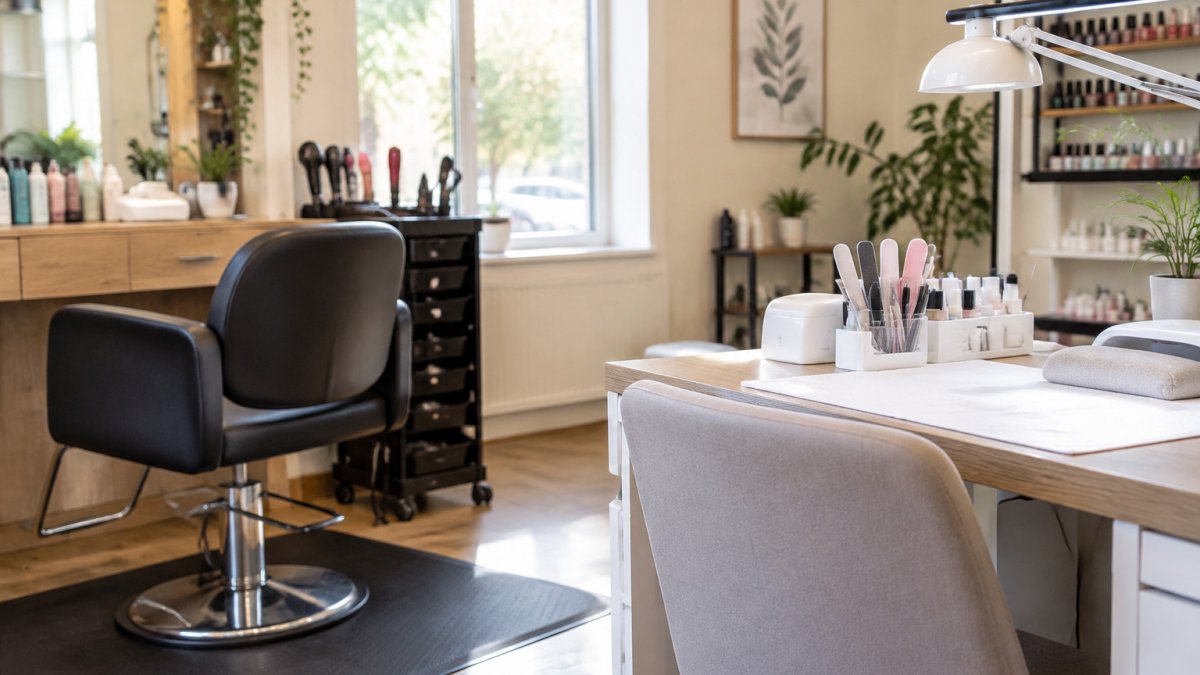
Choose a hydraulic styling chair that adjusts smoothly and locks firmly, since you will raise and lower it for every client. Pair it with a salon mirror at face height and a work counter deep enough to hold your implements without crowding. Many beginners underestimate counter space, and a cramped station slows every service.
Shampoo Station and Wash Basin Essentials
If you offer hair services, a shampoo station with a wash basin, a comfortable backrest, and a reliable water connection is essential. Test the water flow and drainage before committing to a layout, because a poorly placed basin is difficult to move later.
Hair Tools Every Beginner Needs: Shears, Clippers, Dryers and Styling Irons
Hair tools are where beginners most often overspend on features they never use. Start with a pair of quality shears, a comb set, a blow dryer with a concentrator nozzle, and a flat iron. Add clippers and trimmers only once you are booking services that require them.
Keep your hair tools organized and within reach. Thoughtful storage saves time between clients and reduces the risk of misplacing expensive blades.
Essential Salon Equipment for Beginners Cost: Building a Budget by Priority
Most beginner guides hand you a flat checklist and leave you to guess what to buy first. A better approach is to sort every purchase into three tiers and fund them in order, so you open with a working station instead of a room full of mismatched pieces.
Tier 1, Open-the-doors essentials. These are the items no service can happen without: one sturdy styling chair, a mirror at face height, a work counter or station with drawers, task lighting, a basic implement set (shears or clippers depending on your service), combs and brushes, a blow dryer if you dry hair, capes and towels, and a disinfection setup with an EPA-registered hospital-grade disinfectant, a covered waste container, and a sharps or blade disposal container where applicable. Fund this tier completely before anything else.
Tier 2, Service-specific additions. Add these only when your booked services require them: a shampoo station and wash basin for hair washing, a flat iron or curling iron for finishing services, clippers and trimmers for barbering or short cuts, a steamer or processing unit, a second station if you plan to overlap clients, and a rolling cart for tools you move between stations. A common pattern is to buy Tier 2 items in the order your appointment book fills, not the order a catalog lists them. As your service menu expands, keep specialty tools separate from shared station essentials, and apply the same deliberate approach to safe pedicure tools.
Tier 3, Upgrades and comfort. These improve speed and client experience but do not unlock new services: a hydraulic or electric chair upgrade, a larger mirror, better task lighting, premium shears, a backwash unit with a reclining basin, and branded retail shelving. Defer these until revenue from Tier 1 and Tier 2 work is steady.
Watch out: buying Tier 3 items first is the single most common overspend. A premium chair does not generate revenue if you cannot yet afford shears, disinfectant, and towels to serve the first client.
A practical way to set the budget is to price each Tier 1 item at the quality level you can maintain, add the total, and treat that number as your minimum opening cost. Then price Tier 2 as a separate reserve you draw from as bookings arrive. Keep a written list with the price you paid and the date, because it becomes your replacement schedule later. For consumables such as files and blades, estimate usage per client and multiply by your expected weekly client count before you buy in bulk, a bulk case of an item you use twice a month ties up cash that belongs in Tier 1.
The three tiers below show which purchases come first, so the core setup is funded before any upgrades.
| Tier | Purpose | When to buy |
|---|---|---|
| Tier 1: Open-the-doors essentials | Items no service can happen without | Fund completely first |
| Tier 2: Service-specific additions | Items your booked services require | As your appointment book fills |
| Tier 3: Upgrades and comfort | Speed and client experience, no new services | After steady revenue from Tiers 1 and 2 |
Essential Salon Equipment for Beginners Price List: What Each Item Typically Runs
Prices vary widely by brand and quality tier, so compare each item against your specific service needs. Nail Maxx lists items such as the Nail Files - Jumbo Black - 100/100 - 50 ct at $10.00 and the Nail Files - Diamond Zebra - 100/100 - 50 ct at $15.00, so you can plan consumables against a known budget. For a broader look at professional gel polish brands and how they compare on price and quality, see our gel polish brand comparison.
NAIL FILES - REGULAR GOLD - 100/180 - 50 ct →
Used Essential Salon Equipment for Beginners: When Secondhand Makes Sense
Secondhand equipment can make sense for furniture and larger fixtures, such as a styling chair or a shampoo station, where structural condition matters more than the latest model. Inspect hydraulics, upholstery and plumbing carefully before buying, and avoid used implements that contact skin or cannot be properly sanitized.
Small-Space and Mobile Setups: Equipment Choices for Home and Booth Businesses
A home or booth business needs a compact layout. Choose foldable or wall-mounted storage, a single multipurpose station, and portable lighting. A common mistake is trying to replicate a full salon floor plan in a small room, which leaves no space for clients or movement.
Sanitation, Maintenance and Replacement Planning for Your Salon Tools
Sanitation is the one part of a beginner setup where shortcuts create real risk, and it is also where most checklists stop at "clean your tools." Treat it as three separate jobs, cleaning, disinfection, and sterilization, because each uses different products and different contact times.
Cleaning removes visible debris and must happen before any disinfectant can work. Wash implements with soap and water, scrub hinged tools open so debris does not sit in the joint, and dry them fully. A disinfectant applied over hair, gel dust, or polish residue will not reach the surface it is meant to treat.
Disinfection kills most pathogens on non-porous tools and surfaces. Use an EPA-registered hospital-grade disinfectant mixed to the label dilution and left in contact for the full label contact time, often around 10 minutes for quats-based products, though you must follow the specific product label rather than a general rule. Immerse implements fully in a covered container, and keep a second container for clean, dry tools so wet and dry never mix on the station.
Sterilization is required in some jurisdictions for tools that can draw blood, such as cuticle nippers and reusable blades. An autoclave or a dry-heat sterilizer is the usual route; pouches and indicator strips confirm the cycle ran. Confirm what your state cosmetology or barbering board requires before you assume disinfection is enough.
Porous items cannot be disinfected reliably. Files, buffers, foam toe separators, and wooden sticks should be treated as single-client or single-use items. This is where beginners lose the most money without noticing: a file that looks clean still harbors material in its grit. Budget files and buffers as consumables, not as tools.
Safe-use practices belong in the same routine. Keep shears and blades capped or in a holster when not in use, never carry open blades in a pocket, and keep a sharps container at the station rather than dropping blades in the trash. Store chemicals in labeled original containers, keep the safety data sheets accessible, and check that your ventilation handles the fumes from monomers and disinfectants.
Maintenance and replacement planning is what keeps the setup working after month one. A simple log with the purchase date, cleaning routine, and replacement interval for each item turns guesswork into a schedule. Typical patterns: replace files and buffers per client or per few clients depending on grit wear; replace shear blades or sharpen them when cuts start pulling rather than slicing; replace clipper blades when they heat up or snag; replace towels when they thin or fray; and service hydraulic chairs and shampoo basins on the manufacturer's interval, checking for leaks and wobble at each service. Worn tools cause uneven results and can irritate clients, so replacement is a quality issue, not just a cost.
Watch out: a disinfectant that is past its dilution date, or a container left uncovered, silently stops working. Mix fresh solution on the schedule the label states and date the container.
Licensing and health rules vary by state and by board, so confirm your local requirements for disinfection, sterilization, and single-use items before you open, this section gives the working routine, not a substitute for your board's rules.
Booking Your First Order: Stocking Your Salon From Nail Maxx
When you are ready to order, start with the core items on your checklist and add service-specific products once you know your demand. Before you place that first order, read our guide to buying authentic OPI to confirm you are sourcing genuine products. Nail Maxx offers a range of professional supplies for salons and home studios. Browse the full catalog and place your first order to get your salon stocked and ready to serve clients.
Frequently Asked Questions
What equipment do I need to start a salon?
A beginner salon needs a functional workstation, a comfortable styling or service chair, adequate lighting, a sanitation station, and a core set of hand tools. For nail services, that means a dependable table, a UV or LED lamp, and quality files and buffers. Start with what you use on every client, such as the chair, station, and basic tools, and add specialty equipment once you have regular bookings. Buying in stages keeps cash free while you build your client base.
How much does basic salon equipment cost?
Basic salon equipment costs vary widely depending on whether you buy new or used and which services you offer. A focused nail setup can start with a modest budget for tools and consumables, while a full hair salon with shampoo stations and hood dryers requires significantly more capital. Prioritize the items that generate income first, then expand. Always compare the price of the item against how often you will use it in your service menu before committing.
Which salon equipment should beginners buy first?
Beginners should buy the items used in every appointment first: a reliable workstation or chair, lighting, sanitation supplies, and the hand tools that define the quality of your work. For nail technicians, quality files are a good starting point. The Nail Maxx Professional Nail Files, Regular Gold 100/180 (50 ct, $6.00), are designed for precise grit and smooth filing across gel, acrylic, dip powder, and natural nails, making them a practical everyday staple for new technicians.
Is it better to buy new or used salon equipment?
Used salon equipment can save a meaningful amount on large pieces like styling chairs, dryers, and stations, but it carries risks. Inspect hydraulic chairs for smooth lift and stable base, check that electrical equipment works properly, and avoid anything with cracked surfaces or worn components. Consumables and hygiene-sensitive tools such as files, buffers, and brushes are usually better bought new. New equipment often includes warranties, which matter for items you use daily.
What salon equipment can beginners skip at first?
Beginners can usually skip expensive specialty items at the start, such as multiple shampoo stations, high-end hood dryers, or a full range of clipper and trimmer options. Instead, focus on a versatile core kit that covers your most common services. You can add equipment once your service menu expands and clients request it. Delaying these purchases protects your cash flow during the early months when bookings are still building.
